Dr.STEM
A digital measurement system for physics, chemistry, biology and geography classrooms, STEM labs and learning centres.

Why schools choose Dr.STEM
A ready-made solution that covers the core topics of science lessons, scales easily and gives students hands-on experience with real data from the very first lesson.
Modular
The system grows with your school: add sensors and kits step by step.
Quick setup
Connect and start an experiment in under two minutes. No complex installation.
Data visualisation
Students see graphs in real time and analyse changes in the readings straight away.
Fair price
A well-balanced kit price for highly functional equipment.
Curriculum coverage
Covers core topics of secondary-school physics, chemistry, biology and geography.
Support
Ready-made lesson scenarios, experiment instructions and technical advice at every stage.
Five components, one solution
From the display device to ready-made lesson scenarios, everything works as one system.
Tablet / laptop
Device for displaying, processing and saving data (chosen by the customer).
Central module
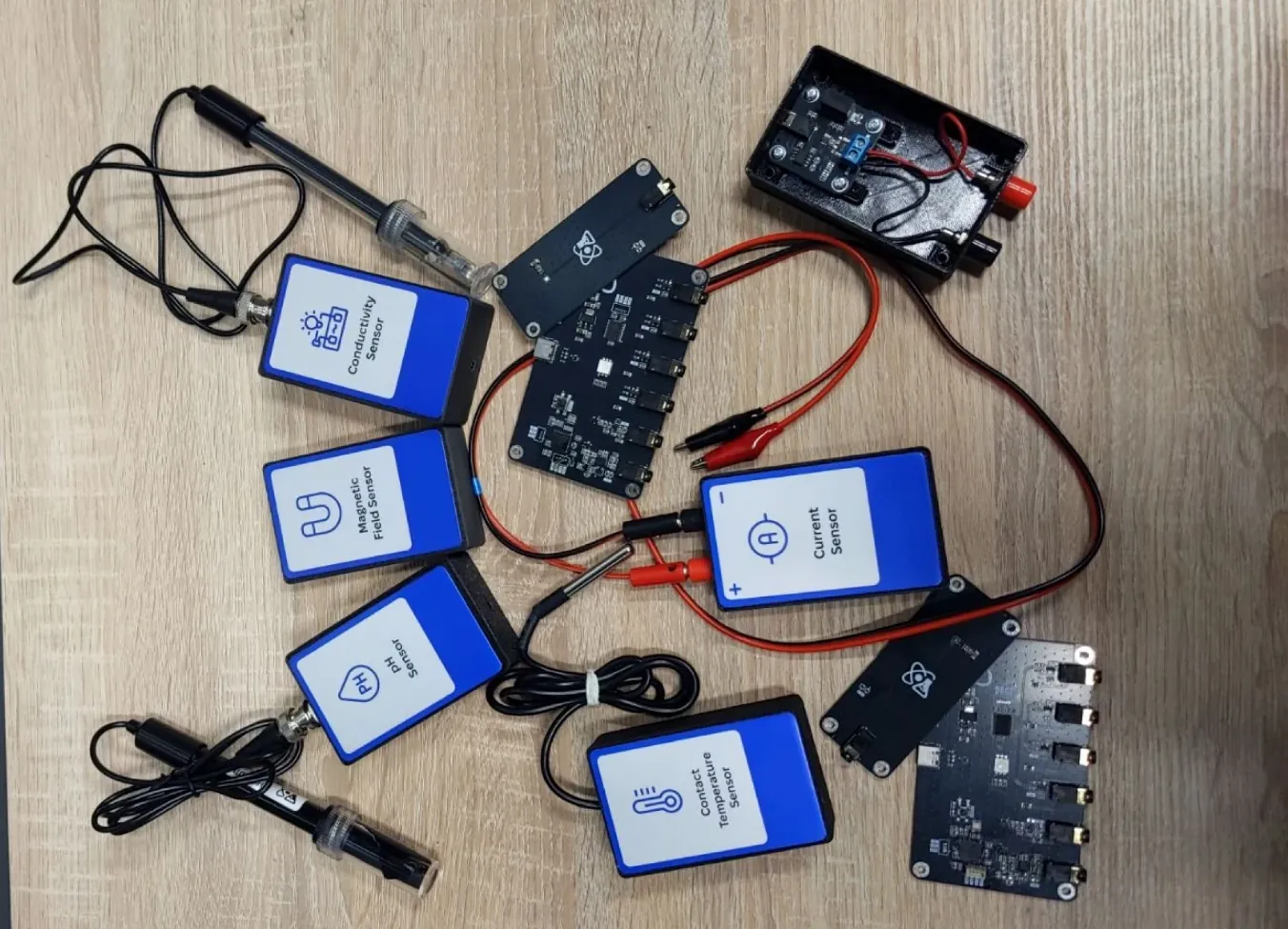
The unit the sensors connect to. It connects to the computer via USB.
Sensors
Modular devices for measuring temperature, pressure, pH, light, sound and more.
Software
An intuitive program for data visualisation, graphs and saving results.
Teaching materials
Ready-made lesson scenarios and experiment instructions for teachers.
Real hardware, clearly labelled
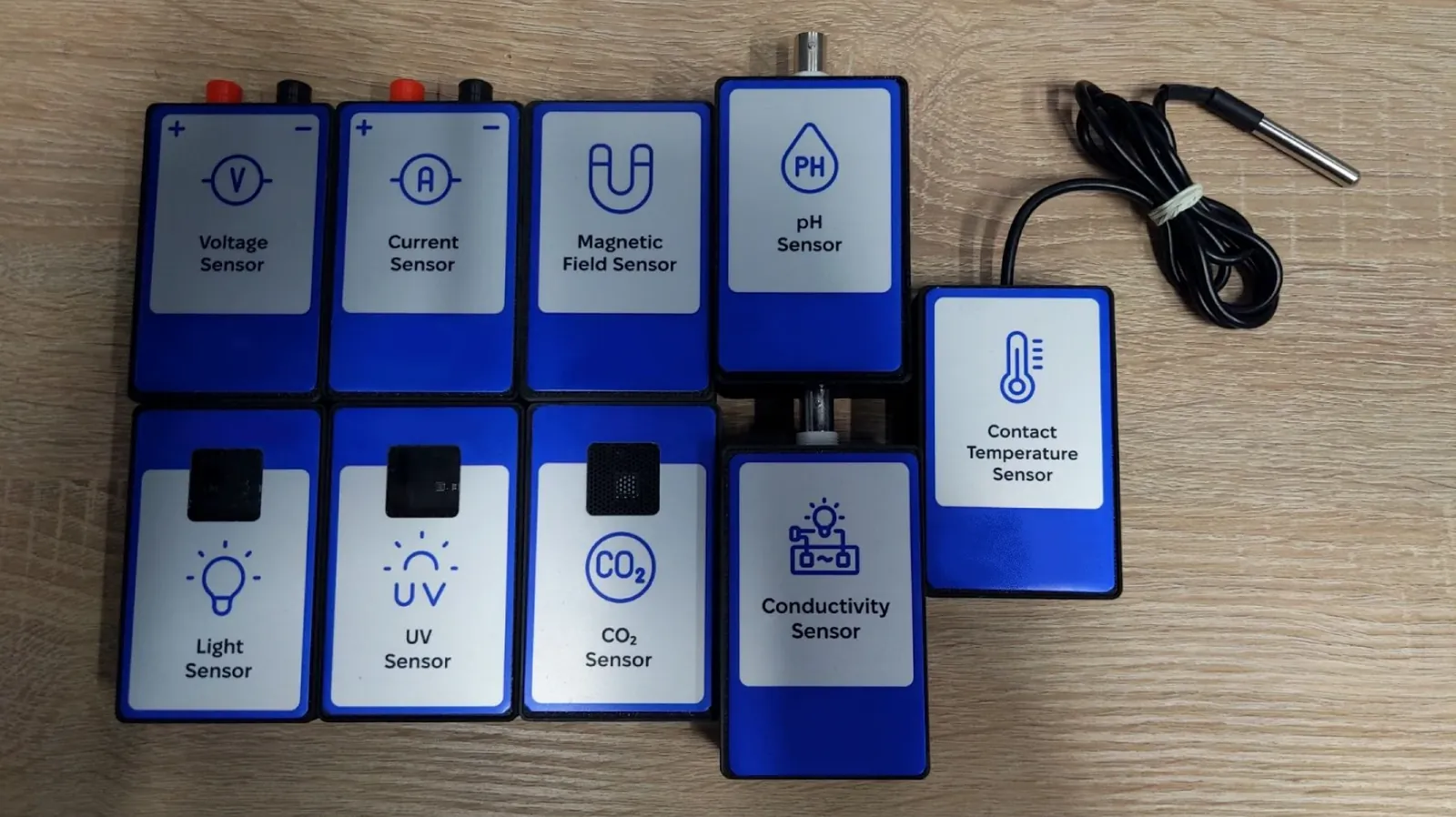
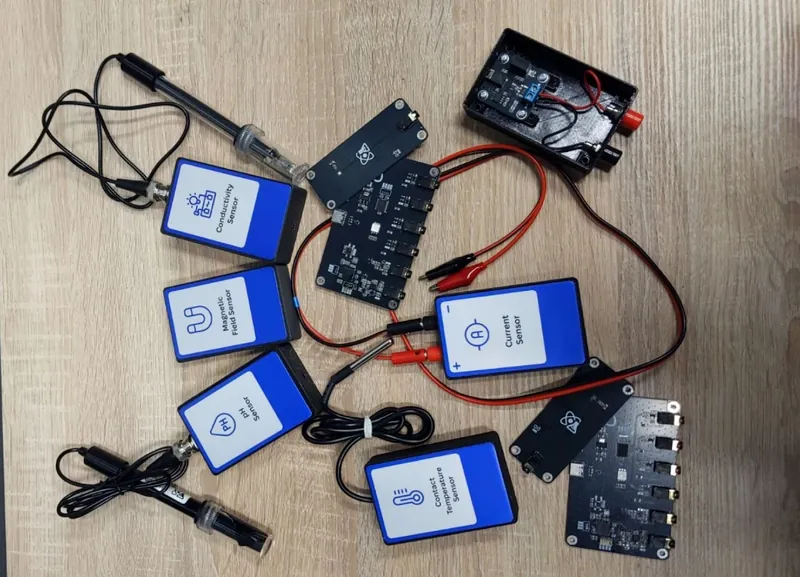
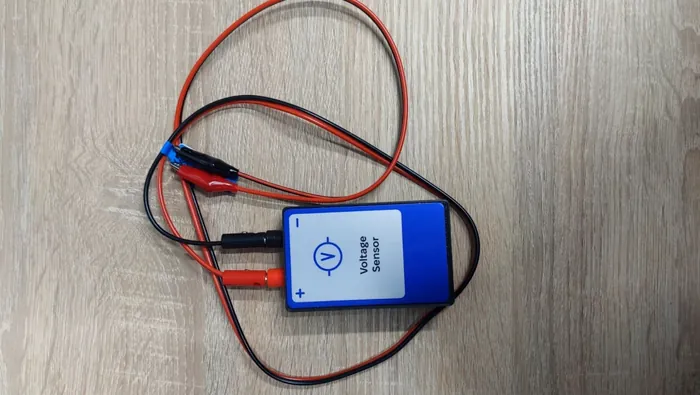
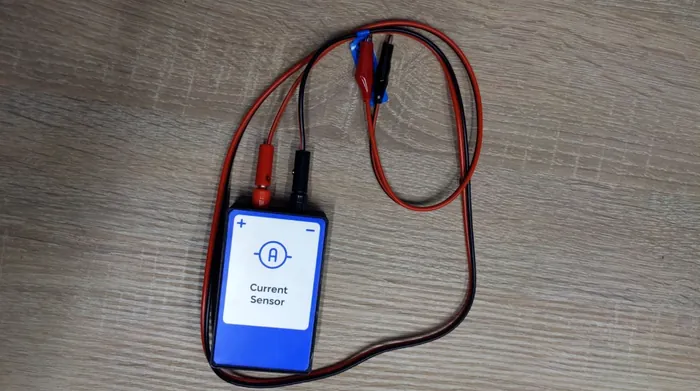
Every sensor is a compact module in its own case with a clear label. The sensors connect by cable to the central module, which links to a tablet or laptop.
Choose a kit for your subject
Five ready-made configurations, each with its own set of sensors and the key topics it covers.
Physics
Mechanics, thermal phenomena, electricity, waves and sound.
Each kit comes in a teacher version (one per class) and a student version (one per group of 5–6 students).
Sensors in the kit
🔬 Key topics and sensors
Chemistry
Acidity of solutions, reaction rates, gas evolution and conductivity of electrolytes.
Each kit comes in a teacher version (one per class) and a student version (one per group of 5–6 students).
Sensors in the kit
🔬 Key topics and sensors
Biology
Respiration and photosynthesis, human physiology, environmental ecology and aquatic ecosystems.
Each kit comes in a teacher version (one per class) and a student version (one per group of 5–6 students).
Sensors in the kit
🔬 Key topics and sensors
Important: the ECG and heart rate sensors are educational demonstration sensors, not medical devices. They are meant for showing how the heart works and for school experiments, not for diagnosis or clinical use.
Geography
Weather and microclimate, atmosphere, water and soils, the Earth’s magnetic field and solar radiation.
Each kit comes in a teacher version (one per class) and a student version (one per group of 5–6 students).
Weather station (multi-sensor, 9 in 1)
Separate sensors
🔬 Key topics and sensors
Universal
A wide range of sensors that covers the largest number of lessons and learning scenarios across all subjects.
Choose a configurationEach kit comes in a teacher version (one per class) and a student version (one per group of 5–6 students).
How customisation works
Take the universal kit as it is
Choose or swap sensors yourself
Ask us to help with the selection for special requirements
💬 Customisation examples
- Current0.82A
- Voltage12.4V
- Skin conductance5.2µS
- Temperature23.6°C
- Illuminance1840lx
- UV radiation4UV
- Soil moisture37%
- Weather station21°C1013hPa3UV
- Oxygen O₂20.9%
- Respiration rate16breaths/min
- Magnetic field0.05mT
- Rotation angle135°
- CO₂612ppm
- Multi-sensor 3-in-1101.3kPa24°C43%
- Thermocouple312°C
- pH6.8pH
- Colorimeter0.42Abs38%T
- Conductivity & salinity540µS/cm0.3ppt
- Turbidity24NTU
- Dissolved oxygen8.2mg/L
- Absolute gas pressure104kPa
- Drop counter3drops/s
- Photogate1.42m/s
- Force9.8N
- Surface temperature31.8°C
- ECG1.1mV
- Heart rate72bpm
- Blood pressure120/80mmHg
- Spirometer2.4L/s
- Sound440Hz
Data collection and visualisation in real time
The Dr.STEM software reads data from the sensors and instantly turns it into graphs that students work with during the experiment.
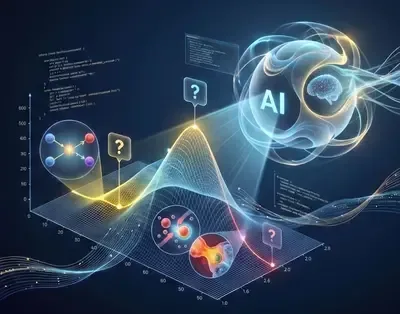
The experiment becomes a dialogue, not just a measurement
An AI consultant is built right into the experiment. Students look at the graph and can ask straight away:
We turn the lab into a team game
Gamification turns the experiment into a competition in which teams complete missions based on real data.
Mission types
Teacher dashboard: all teams on one screen with live progress — mission stage and the data received.
Upgrade your STEM lab
Send us a request and we will help you choose the best Dr.STEM configuration for your lessons, or order additional sensors.
Need individual sensors?
Our range of sensors keeps growing. Ask us for the current list.